
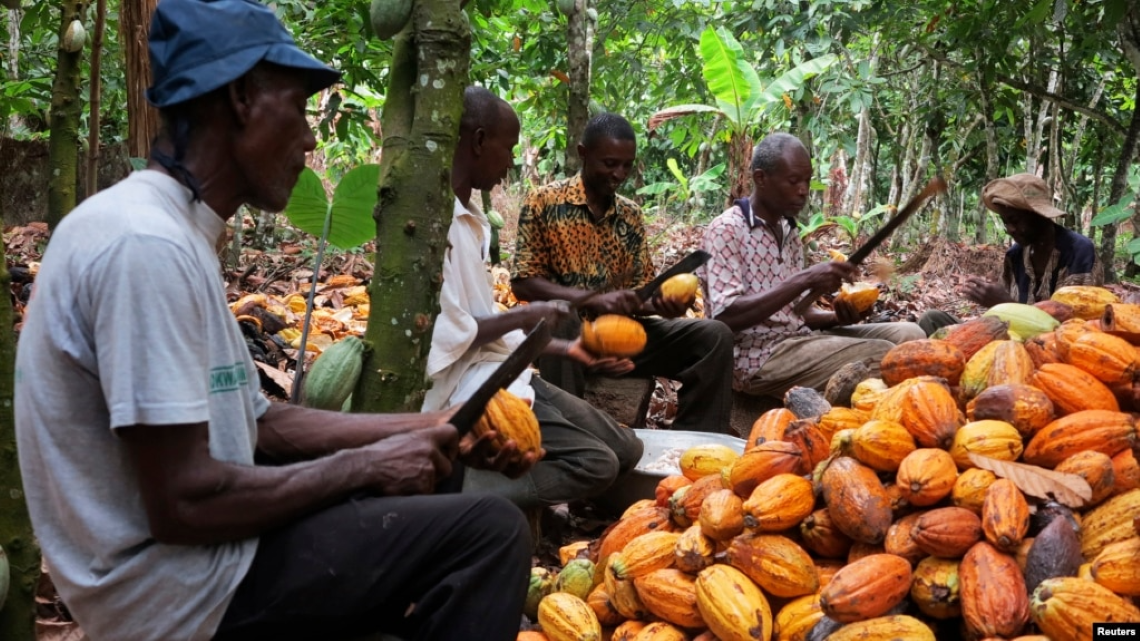
ACCRA, Ghana (SCANS) — Ghana’s government sharply reduced the price it pays cocoa farmers and rolled out a new financing model for bean purchases Thursday, moves aimed at reviving demand in the world’s second-largest cocoa exporting nation after a sustained slump in global prices but sparking sharp criticism from farmers and political opponents.
Finance Minister Cassiel Ato Forson announced that the farmgate price for the remainder of the 2025-26 crop year would be set at 41,392 Ghana cedis ($3,580) per metric ton, down from 58,000 cedis ($5,300) previously, aligning it more closely with international market benchmarks. The new rate, effective Feb. 12, also translates to 2,587 cedis per 64-kilogram bag, a roughly 28.6% reduction from late-2025 levels.
The government said the cuts were necessary as global cocoa prices have roughly halved in the past year, dropping to near $4,000 per ton, and Ghana’s higher set price had made its beans less competitive for traders, contributing to mounting unsold stocks and delayed payments to farmers.
To address a long-running liquidity crunch, authorities introduced a new domestic cocoa bond financing mechanism, intended to fund purchases within the same crop year instead of relying on costly international syndicated loans. A proposed Cocoa Board bill would link future farmgate prices to changes in the international Free-On-Board (FOB) price, guaranteeing farmers at least 70% of FOB to offer some income protection.
Farmers Still Unpaid, Opposition Voices Alarm
Thousands of cocoa growers remain unpaid for deliveries made since late 2025, with some unable to afford food, schooling or basic farming inputs, Reuters reporting and farmer accounts on social media indicate. Many have expressed willingness to accept lower future prices only after outstanding dues are cleared.
The political fallout was swift. The Minority Caucus in Parliament described the price reduction as an “unprecedented betrayal” of farmers, citing campaign promises of higher returns and accusing the government of undermining livelihoods.
Buyers and Analysts Split
Licensed Cocoa Buyers Association official Vitus Dzah publicly backed the new price structure as a pragmatic response to global market realities, framing it as necessary for stabilizing sector finances and restoring liquidity for buyers. ([newsghana.com.gh][6])
Economic analysts however warn the lower rate could mean cumulative losses exceeding GH¢2 billion for farmers this season, with broader risks of farm abandonment or migration to informal mining activities should cocoa become consistently unprofitable.
Long-Term Strategy Includes Processing Push
Officials emphasized that Ghana is also aiming to expand domestic cocoa processing to at least 50% of output by the 2026-27 season, part of a broader strategy to capture more value locally and reduce dependence on raw bean exports.
Cocoa remains a linchpin of Ghana’s economy, supporting millions of smallholders and contributing significantly to export earnings, but persistent price volatility and structural financing issues have strained the industry. Global futures have oscillated sharply over recent seasons, complicating budgeting and payment flows for state regulators and buyers alike.