
ANTANANARIVO, Madagascar (SCANS) — Intense Tropical Cyclone Gezani has killed at least 36 people, destroyed roughly 18,000 homes and left tens of thousands more reeling in one of Madagascar’s worst natural disasters in years, authorities and relief officials said Thursday.
The storm made landfall late Tuesday near the port city of Toamasina with sustained winds exceeding 195 kph (121 mph) and gusts as high as 250 kph (155 mph), smashing through eastern coastal communities before sweeping westward across the island. Winds and flooding caused widespread building collapses, infrastructure damage and power outages.
Madagascar’s National Office for Risk and Disaster Management reported that at least 36 people were killed, six remained unaccounted for and more than 370 were injured. The agency said about 17,980 homes were completely destroyed and over 37,000 others damaged by powerful winds and torrential rains. More than 250,000 people have been affected by the storm.
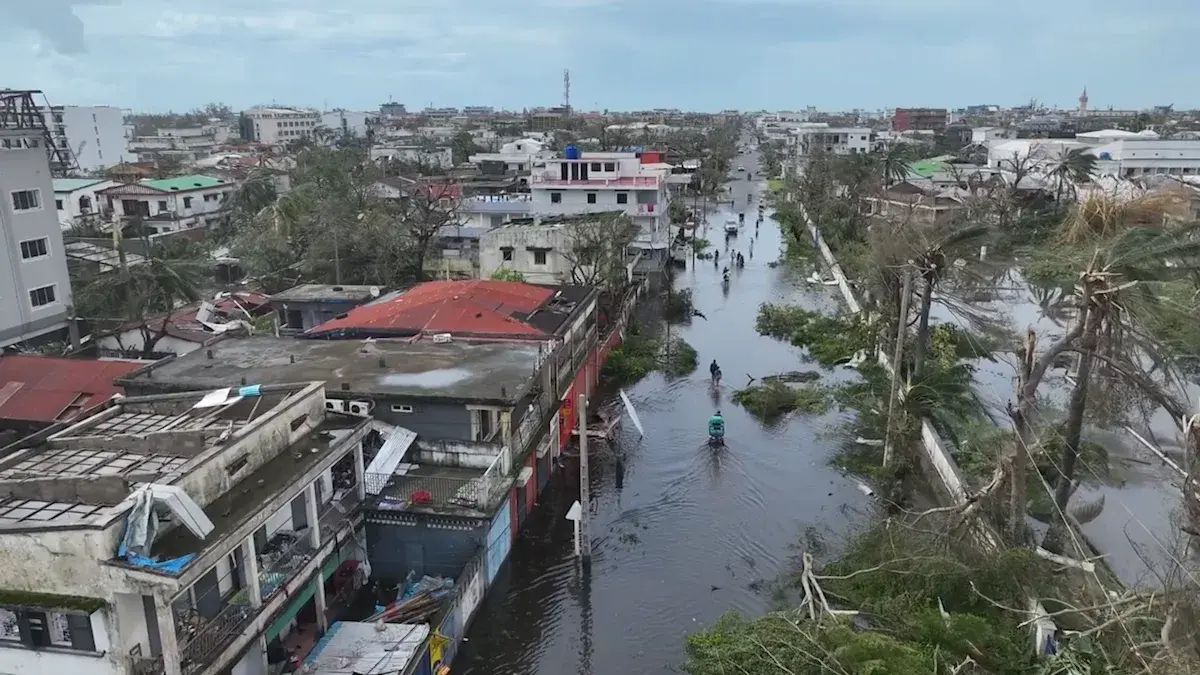
Rescue teams in Toamasina, a city of roughly 400,000 residents that took the brunt of the storm, described scenes of devastation, with whole neighbourhoods flattened, roads blocked by debris and floodwaters rising into homes. Many residents are walking through knee-deep water and salvaging belongings from shattered houses.
President Michael Randrianirina, who took power in a military coup last year, toured the hardest-hit districts on Thursday and declared a “state of national disaster,” urging both national solidarity and international support to aid relief efforts. “We can clearly see what Toamasina needs right now: above all, food, basic necessities and building materials,” he said after meeting with survivors and emergency responders.
The storm’s disruption comes just weeks after Tropical Cyclone Fytia struck the nation’s northwest, killed at least 14 people and displaced tens of thousands, compounding Madagascar’s vulnerability to extreme weather during its cyclone season.
Forecasters said Gezani weakened to a tropical storm as it tracked inland but warned it could re-intensify when it reaches the Mozambique Channel. Weather agencies have also issued flood warnings for neighbouring countries, with Zambia and Mozambique preparing for heavy rains and potential impacts from the system’s remnants.
Aid organizations are now scrambling to assess needs for shelter, clean water, medical assistance and food supplies as families who lost homes search for safe ground and support. Local officials said long-term recovery could take months as communities confront shattered infrastructure and the looming threat of further storms.