
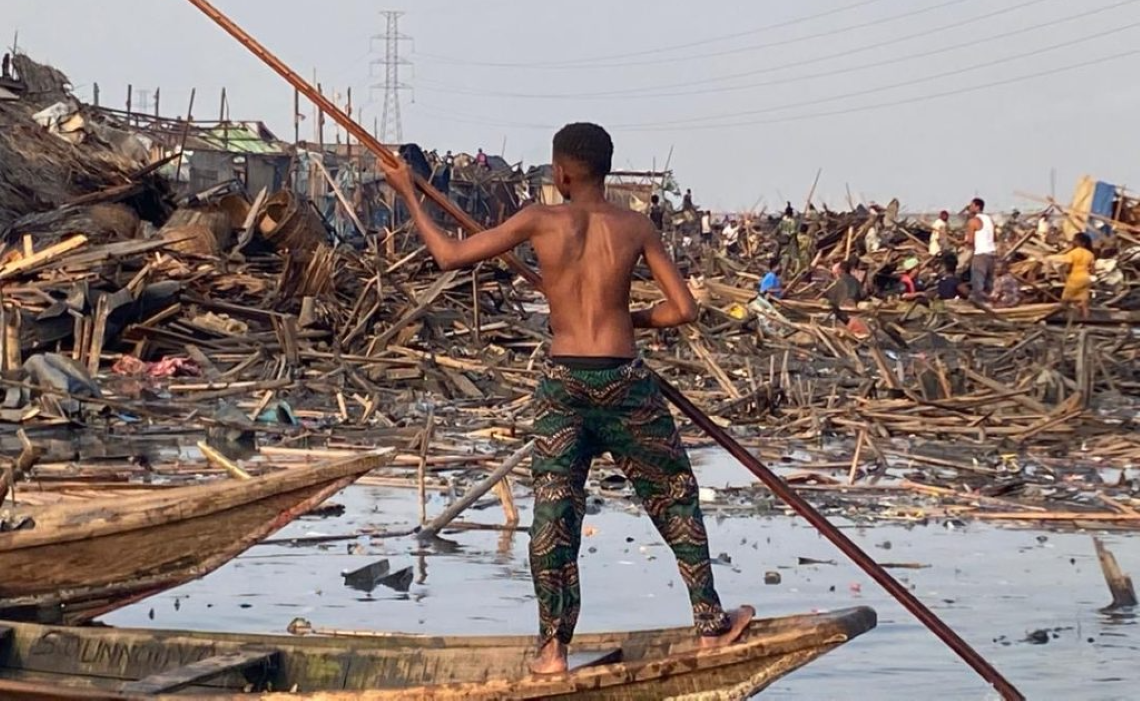
LAGOS, Nigeria (SCANS) — As the dust settles over the razed stilts of Makoko, a high-stakes legal battle is brewing. At the heart of the conflict is a fundamental question of Nigerian law: Who owns the water?
The Land Use Act of 1978
The primary hurdle for the residents of Makoko is the **Land Use Act of 1978**. This law remains one of the most controversial pieces of legislation in Nigerian history. It effectively vested all land in the territory of each state in the Governor of that state, to be held in “trust” for the people.
* The Conflict: Because the Governor holds the ultimate title, the government can revoke “rights of occupancy” for what it deems “overriding public interest.”
* The Gap: Most Makoko residents lack formal “Certificates of Occupancy” (C of O), relying instead on ancestral claims that predate the Nigerian state. In the eyes of the law, this often renders them “squatters” despite centuries of residency.
The “Riparian” Rights and Federal vs. State Control
A unique twist in the Makoko case is the jurisdiction over the lagoon itself.
* Federal Authority: Under Nigerian law, the National Inland Waterways Authority (NIWA) generally has jurisdiction over navigable waterways and the land within 100 meters of the shoreline.
* The Overlap: Residents argue that the Lagos State Government exceeded its authority by demolishing structures on federal waterways without NIWA’s direct intervention. This “jurisdictional tug-of-war” has previously been used in court to stay evictions in other waterfront communities like Otodo-Gbame.
The Constitutional Right to Dignity
Human rights lawyers are increasingly bypassing land titles and focusing on **Chapter IV of the Nigerian Constitution**, which guarantees:
1. The Right to Life: Arguing that forced eviction without alternative shelter is a threat to life.
2. Freedom from Torture and Inhuman Treatment: The 2017 landmark ruling in Olowu vs. Lagos State Government established that forced evictions without adequate notice or resettlement plans constitute “cruel and inhuman treatment.”
“The law is clear that even if someone is a trespasser, you cannot throw them into the street—or in this case, the ocean—without due process and human dignity,” says Lagos-based human rights attorney Chidi Amanze.
International Protections
Nigeria is a signatory to the African Charter on Human and Peoples’ Rights, which protects against arbitrary dispossession. While local courts are sometimes slow to enforce international treaties, these frameworks provide the basis for residents to seek intervention from the ECOWAS Court of Justice, which has previously ruled against the Nigerian government in similar human rights cases.
| Case | Ruling | Impact on Makoko |
| Otodo-Gbame (2017) | High Court ruled evictions unconstitutional. | Set a precedent that “urban renewal” is not a valid excuse for homelessness. |
| Land Use Act (1978) | State holds all land. | Makes it difficult for residents to claim “ownership” without government papers. |
| NIWA Act | Federal control of waterways. | Creates a potential legal shield if the State acts without Federal consent. |