
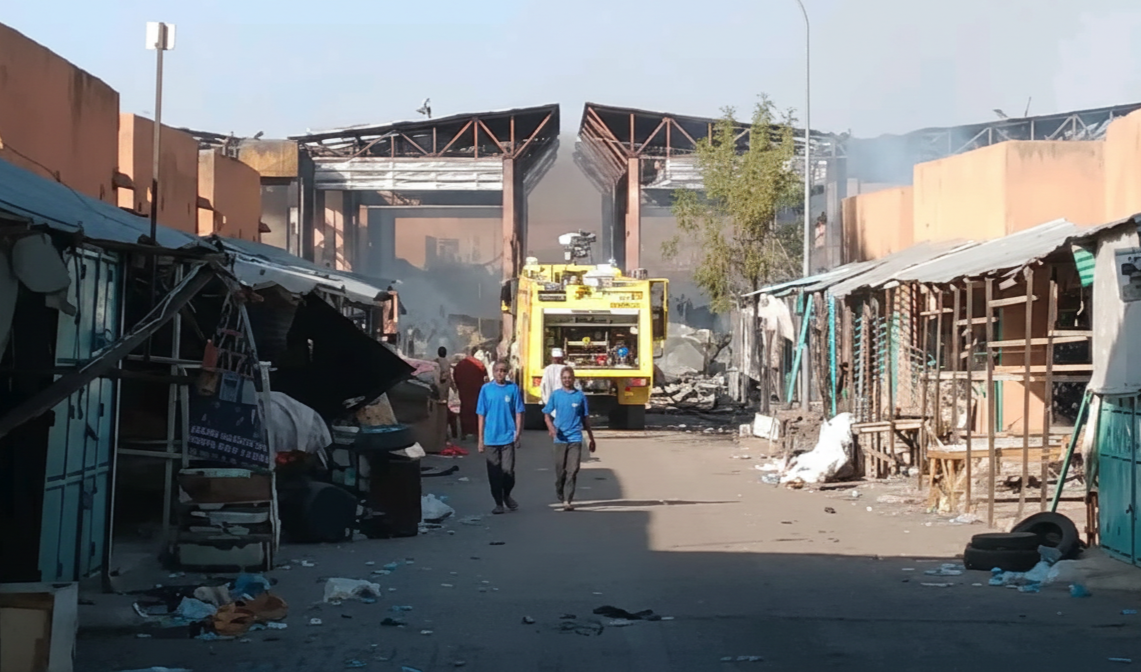
MARADI, Niger (SCANS) — A massive fire swept through the Grand Market of Maradi late Saturday, destroying large sections of the city’s main commercial center and dealing a heavy blow to an economy that anchors trade across southern Niger and neighboring parts of the Sahel.
Firefighters continued to douse smoldering embers Sunday morning after battling the blaze for hours overnight. Initial assessments by traders and local officials indicate that the market’s central warehouse and dozens of surrounding shops were completely destroyed, wiping out inventories built over years.
No deaths have been reported, but the scale of economic loss is expected to be severe.
On Sunday, Niger’s Minister of Commerce, Abdoulaye Saidou, visited the scene during a working trip to the region, walking through the charred remains of stalls and storage facilities to assess the damage. He met with affected traders as authorities began compiling an initial estimate of losses.
“This market is the economic heart of Maradi,” a local trader said, standing near the ruins of what had been his shop. “What burned here last night feeds thousands of families.”
Maradi, located near the border with Nigeria, is one of Niger’s most important commercial centers. Its Grand Market serves as a key node in regional trade networks linking Niger to northern Nigeria, Chad and beyond. Agricultural produce, livestock products, textiles, fuel and imported consumer goods transit through the market daily, supplying both urban residents and rural communities across the region.
The destruction of the market threatens to disrupt supply chains at a time when Niger is already grappling with economic strain, insecurity and reduced cross-border trade.
The traditional ruler of the Maradi region, Sultan Ali Aki, also visited the site Sunday, offering condolences to traders and their families. He described the fire as devastating and urged solidarity with those who lost their livelihoods.
Witnesses said the fire broke out late Saturday night and spread rapidly through tightly packed stalls, many built with flammable materials. Poor access routes and limited firefighting infrastructure complicated efforts to contain the flames, allowing the blaze to burn for several hours before it was brought under control.
Market fires are a recurring problem in Niger’s major cities, often fueled by overcrowding, illegal electrical connections and a lack of fire safety measures. Similar incidents in recent years in Niamey, Zinder and Diffa have destroyed markets with little warning and limited compensation for victims.
For now, the Grand Market of Maradi remains largely closed, its entrances sealed off as authorities assess structural damage and security risks. Traders, many of whom rely on daily sales to survive, face an uncertain future as calls grow for emergency assistance and longer-term reforms to protect critical commercial infrastructure.
As smoke still hangs in the air, residents say the silence of the market is a stark reminder of how quickly the city’s economic lifeline can be cut.