
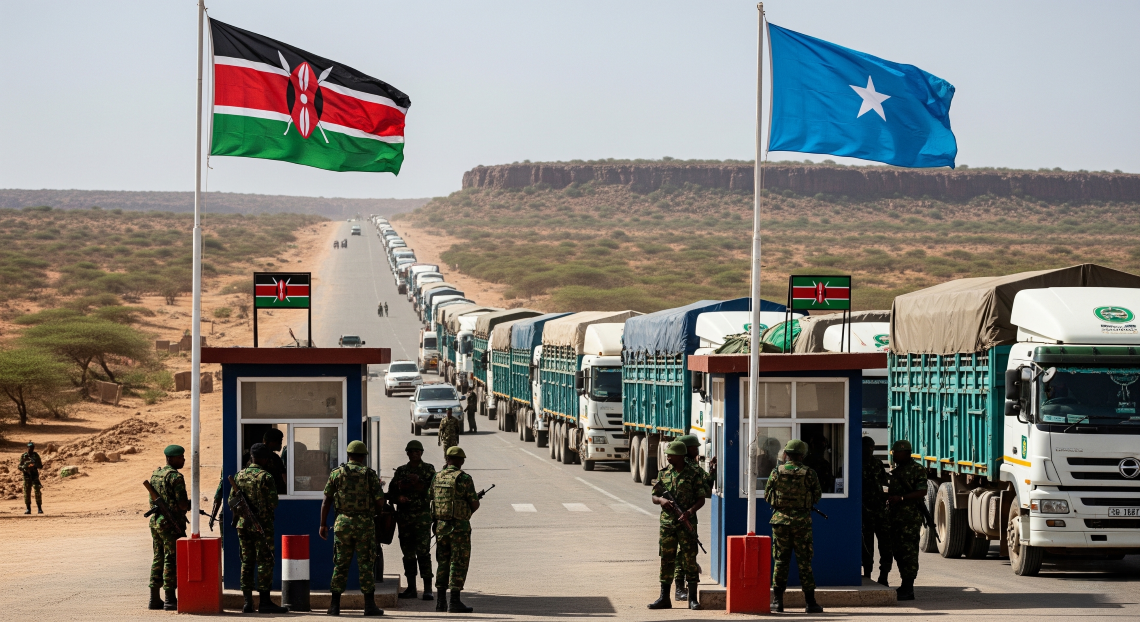
MANDERA, Kenya (SCANS) — Kenya will reopen its long-shuttered border with Somalia in April, President William Ruto announced, signaling a major policy shift 15 years after the frontier was closed to stem the tide of attacks by the al-Shabab militant group.
The reopening, which follows a postponed attempt in 2023, will initially focus on two key crossings. Ruto, speaking Thursday from the border town of Mandera, said the decision follows years of exhaustive security assessments. He promised a “heavy deployment” of security forces to prevent the move from compromising national safety or facilitating the smuggling of illicit weapons and contraband.
“It is unacceptable that fellow Kenyans in Mandera remain cut off from their kin and neighbors in Somalia,” Ruto said in a statement on X, formerly Twitter. He added that he expects the reopening to revitalize cross-border trade and promote “mutual prosperity.”
The border was officially closed in 2011 when Kenya sent troops into Somalia to combat al-Shabab, an al-Qaida-linked group that has since orchestrated several high-profile massacres on Kenyan soil. These include:
-
2013: The Westgate shopping mall siege in Nairobi (67 dead).
-
2014: The execution of 28 bus passengers in Mandera County.
-
2015: The Garissa University massacre (148 dead).
-
2019: The DusitD2 hotel complex attack in Nairobi (21 dead).
The region’s volatile security history has led to previous false starts. In 2015, Kenya attempted to secure the 423-mile (680km) border by constructing a perimeter barrier. However, the project was suspended after three years with only 6 miles (10km) of wire fencing completed at a cost of approximately $35 million.
During his visit to Mandera, a region with a significant population of ethnic Somalis, Ruto took a hardline stance against the militants, calling them “useless” and urging local residents to collaborate with the state.
“I want to assure that Kenya will work together with you,” Ruto said. “Just help us combat these criminals and terrorists.”