
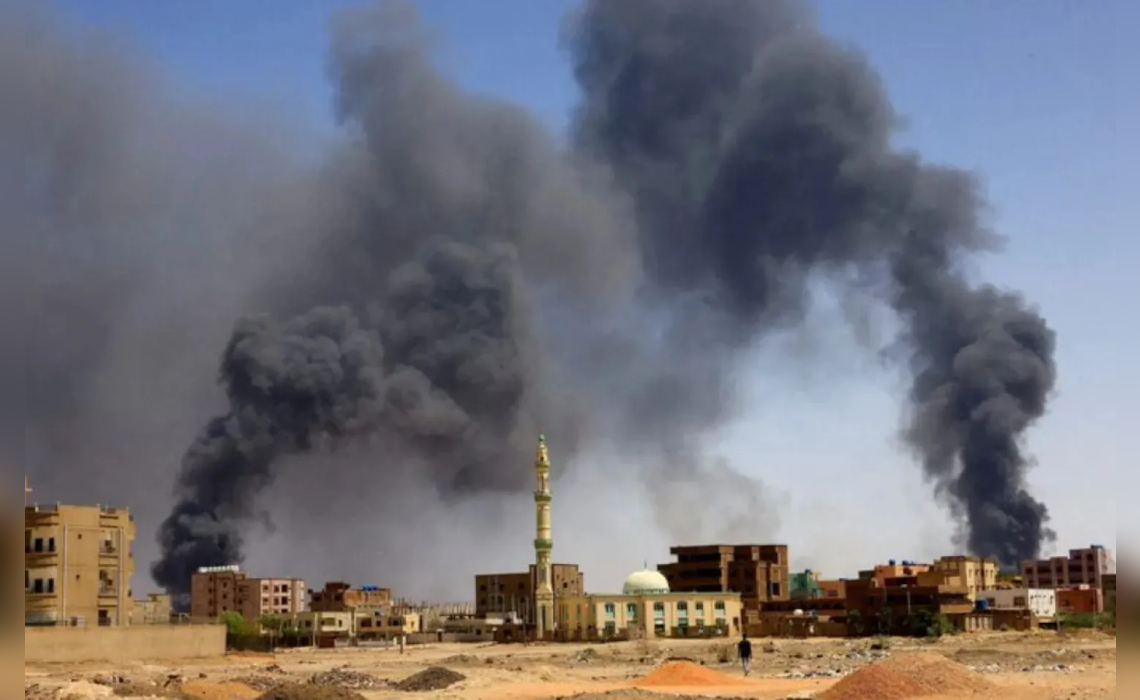
The Sudanese Armed Forces retook the city of Bara and secured el-Obeid in North Kordofan state this month, extending a string of military advances that mark a widening gap between the two warring factions. Earlier, the army ended a years-long RSF siege of Kadugli, the capital of South Kordofan state, revealing overwhelming civilian suffering in the process.
The Sudanese army has reorganized and redeployed troops across Kordofan and launched air strikes and drone strikes on RSF positions in Darfur and Kordofan, signaling preparations for a broader offensive. The advances represent a sharp reversal from 2023 and 2024, when the paramilitary Rapid Support Forces dominated much of the battlefield.
RSF supply lines have deteriorated over recent months, analysts say. Egypt, Saudi Arabia, and Somalia began denying UAE overflight permission in January 2026, cutting off air routes that the group’s external backers had relied on. SAF has conducted a drone campaign to disrupt RSF supply lines and logistical hubs, including Nyala airport and along the Chad border.
The United Arab Emirates has long been accused of supplying the RSF with weapons and military support. Flight-tracking data shows UAE-based cargo planes made repeated trips to an Ethiopian airbase between January 3 and 17, amid reports of weapons transfers. The UAE denies supplying the group, though it acknowledged in recent statements that it will not “transfer any weapons to the RSF going forward.”
The humanitarian toll remains severe. The war has displaced 11 million people internally and abroad and created the world’s largest displacement and hunger crisis, with more than 33 million people pushed towards starvation.