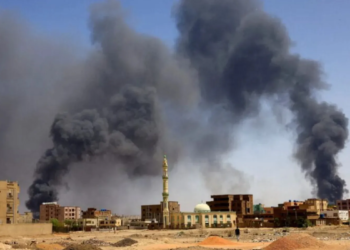

NAIROBI/CAIRO/GENEVA (SCANS) — United Nations human rights investigators say they have documented what may be among the most egregious violations of international law during Sudan’s nearly three-year civil war, accusing the powerful paramilitary Rapid Support Forces of widespread killings, sexual violence and other atrocities in the western city of el-Fasher last year.
A report by the Office of the United Nations High Commissioner for Human Rights (OHCHR) says interviews with more than 140 victims and witnesses indicate at least 6,000 people were killed in the first three days after the RSF seized el-Fasher in late October 2025 following a prolonged siege. Of those, around 4,400 were killed within the city and some 1,600 along exit routes as civilians fled, the UN rights office said. Officials cautioned that the actual death toll is likely significantly higher, citing ongoing uncertainty about missing persons and unverified reports from within sealed-off areas.
The RSF — a powerful force rooted in the Janjaweed militias that fought earlier wars in Darfur — has not publicly responded to the latest OHCHR report. The group has previously denied accusations of systematic abuses, blaming other armed actors for civilian deaths.
UN rights chief Volker Türk reiterated calls for credible investigations and accountability. “These violations profoundly compound the suffering of civilians already subjected to siege, starvation and sustained hostilities,” he said, urging both sides in Sudan’s conflict to halt attacks and respect international humanitarian law.
Survivors, aid groups, and advocates report brutality and sexual violence
Separate testimony collected by Amnesty International and relief agencies echoes the UN’s findings, detailing executions of unarmed men, rape of women and girls, torture and other targeted attacks on civilians during the RSF’s offensive to capture el-Fasher. Similar accounts suggest the violence has disproportionately affected non-Arab communities in the broader Darfur region, raising concerns about ethnically driven patterns of abuse.
Witnesses recount horrific scenes in university dormitories and displacement camps, where civilians had taken shelter, and survivors have described summary executions of groups of men and indiscriminate gunfire into crowds.
Newer violence and civilian casualties amid ongoing war
The conflict that erupted in 2023 between the RSF and the regular Sudanese Armed Forces (SAF) shows no sign of abating. Reports this week indicate that RSF operations have extended beyond Darfur, with a drone strike on a mosque in North Kordofan killing two children and wounding more than a dozen civilians, according to the Sudan Doctors Network. Another RSF drone attack reportedly killed displaced people in the same region.
International media and human rights advocates have described the broader war as one of the world’s worst ongoing humanitarian catastrophes, involving shelling of civilian areas, damage to health infrastructure, and widespread displacement.
Regional dynamics and external involvement
In a development underscoring Sudan’s conflict complexity, Reuters reported that Ethiopia is hosting a secret training camp for RSF fighters near its border, with thousands reportedly being trained and logistical support allegedly financed by the United Arab Emirates — a claim the UAE denies. The camp is said to include drones and other equipment that could extend RSF operations into additional fronts of the war.
International response and accountability efforts
Foreign governments and multilateral bodies have increasingly condemned atrocities in Sudan’s civil war. A joint statement by more than 20 nations in late 2025 denounced mass killings, ethnically targeted violence and the obstruction of humanitarian aid as “abhorrent violations” of international humanitarian law. Separate measures, including British sanctions on key military figures and alleged foreign recruits, aim to pressure warring parties and their backers.
Meanwhile, global rights organizations and the International Criminal Court are pursuing investigations into potential war crimes and crimes against humanity, collecting satellite imagery, witness statements and forensic evidence.
Civilians caught in food, medical and security crisis
Long before the October takeover of el-Fasher, the city endured an 18-month siege that cut off food, medicine and basic services, leaving tens of thousands dependent on irregular aid deliveries and at heightened risk of famine, according to UN agencies and aid groups.
Residents who fled the city speak of acute malnutrition, lack of clean water, and the aftermath of bombardments and executions. Humanitarian workers warn that without secure access for relief convoys, millions of Sudanese will remain trapped between warring forces and systemic deprivation.