

NIAMEY, Niger (SCANS) – The rapid proliferation of inexpensive, “off-the-shelf” drones is fundamentally altering the conflict landscape in West Africa.
As jihadist groups transition from roadside bombs to sophisticated aerial warfare, the region’s security, legal frameworks, and economic stability hang in the balance.
Across the vast, arid stretches of the Sahel, a new sound is beginning to haunt the front lines of Africa’s longest-running insurgencies: the low hum of a quadcopter.
What was once the preserve of hobbyists and photographers has become the latest weapon of choice for al-Qaeda and Islamic State affiliates. In a significant shift in tactics, these groups are increasingly waging a “war from the skies,” using commercially available drones to bypass traditional ground defenses and strike at the heart of state authority.
A Deadly Evolution in Tactics
The scale of this technological shift is stark. Data from the Armed Conflict Location & Event Data Project (ACLED) reveals that Jama’at Nusrat al-Islam wal-Muslimin (JNIM), an al-Qaeda affiliate, has conducted at least 69 drone strikes in Burkina Faso and Mali since 2023.
Their rivals, the Islamic State (IS), are not far behind; the Islamic State West Africa Province (ISWAP) is now identified as the most “prolific” IS affiliate in drone warfare, executing at least 10 strikes across Nigeria, Cameroon, Niger, and Chad since the start of 2024.
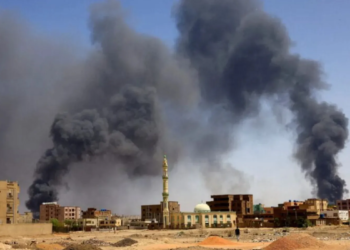
On 29 January 2026, the potential of this technology was laid bare in a “two-pronged” assault on a military base in Nigeria’s Borno state. Jihadists coordinated multiple armed drones with ground fighters, killing nine soldiers.
On the same day, the Islamic State of Sahel Province (ISSP) targeted the international airport in Niger’s capital, Niamey. “Drones lower the cost of conducting attacks, allow militants to gather intelligence with minimal risk, and enable strikes on military targets that were previously harder to reach,” explains security analyst Audu Bulama Bukarti.
The Legal Quagmire: Why Regulation is Failing
One of the most significant hurdles for West African states is the legal and regulatory vacuum surrounding Uncrewed Aerial Systems (UAS).
Governments are in a race to introduce legislation that can control technology designed to be accessible to everyone.In Nigeria, while the government tightly controls drone imports and requires official permission for their use, these laws are frequently bypassed.
Militants utilize vast smuggling networks across the region’s porous borders to acquire devices that are easily hidden and transported. The African Union Peace and Security Council has expressed “serious concern” over this trend, yet regulation faces a “dual-use” dilemma.
Most drones are standard commercial models used for legitimate sectors like agriculture and humanitarian aid. Restricting them too heavily could stifle development, yet failing to do so allows insurgents to operate with relative impunity. Furthermore, in high-risk zones, it is nearly impossible for security forces to distinguish between a malicious drone and a legitimate one.
Beyond the Battlefield: The Economic Toll
The economic implications for the Sahel—already one of the world’s most vulnerable regions—are profound.
1. Infrastructure Sabotage: In North Africa, which serves as a strategic hub for Sahelian groups, Libyan security services recently dismantled an IS cell planning to use armed drones to target gas supply pipelines.
2. Aviation and Trade: There are mounting fears that groups like Al-Shabaab and JNIM could weaponize drones against civil aviation infrastructure. Disruption of air corridors would not only halt trade but also block vital humanitarian flights.
3. Agriculture and Development: The “congested security landscape” has forced governments to redirect limited budgets toward expensive counter-drone technology and private military contractors.
This drain on national treasuries undermines the “sustainable development” needed to address the root causes of extremism.
The Mercenary Factor and the Wagner Group
The security landscape is further complicated by the arrival of Private Military and Security Companies (PMSCs), most notably the Russian-linked Wagner Group.
In Mali and the Central African Republic (CAR), the Wagner Group operates alongside state forces, bringing its own aerial surveillance capabilities to the fight.
However, their presence has created a “self-reinforcing proliferation dynamic”. In early 2023, a rebel group in CAR allegedly used a captured military drone to attack a Wagner Group base in Ndélé. This attack led the CAR government to suspend all drone flights, which ironically hampered the UN’s ability to monitor human rights and protect civilians.
Additionally, these contractors are often the center of disinformation campaigns. Local social media accounts have falsely accused UN peacekeepers of using drones to support insurgents, further destabilizing the public’s trust in international missions.
Knowledge Transfer: From 3D Printers to Foreign Fighters
The expertise behind these drone programs is rarely homegrown. Analysts point to a “transfer of knowledge” from foreign fighters and online networks. Al-Qaeda and IS central commands share manuals on how to weaponize commercial systems, a trend that mirrors the spread of IED expertise.
In a startling case in the UK, a doctoral student was convicted for designing a “single-use” 3D-printed drone intended for IS affiliates in Africa. This demonstrates how globalized the threat has become, with technical expertise being exported directly to the Sahelian front lines.
State Responses: Fighting Fire with Fire
West African militaries are now adopting multi-layered counter-drone strategies:
Nigeria: The government is focusing on indigenous technology, such as the Tsaigumi drone, while integrating UAS into police operations to match the technological savvy of criminal and terrorist groups.
Mali: The Malian military (FAMa) has rapidly expanded its fleet of armed military-grade drones, using them for “kinetic offensive operations” and direct strikes against rebel strongholds in places like Kidal.
Preemptive Action: Experts suggest that to truly combat the threat, armies must move beyond reactive defense and carry out “preemptive strikes” to destroy drone assembly and launch sites before they can be utilized.
A Warning for the Future
As technology advances, the potential for even more devastating attacks grows. Security experts warn that jihadists are exploring the use of drones as delivery platforms for biological or chemical agents.
The emergence of FPV (first-person view) drones — agile, high-speed devices used to devastating effect in the Ukraine conflict—now allows for high-precision targeting using improvised explosives as simple as plastic bottles.
Without harmonized regional legislation and coordinated counter-measures, the low hum of the quadcopter may soon become the definitive sound of a new age of instability across the Sahel.